
Bruker Alicona is celebrating
For 25 years, Bruker Alicona has driven innovation in optical metrology - evolving Focus-Variation from a research breakthrough into a trusted industrial standard, powering accurate 3D surface measurement in industries worldwide.
In the late 1990 and early 2000s, at Graz University of Technology, a small group of researchers and students were working on a question that had no clear industrial answer:
How can you extract reliable 3D information from optical images — not just in theory, but under real-world conditions?
The concept of Focus-Variation emerged in this environment — not as a product idea, but as part of academic research. It was during a diploma thesis that the first working implementations took shape. Early results came quickly: within days, initial algorithms were running; within weeks, the underlying principle proved viable. What no one knew at that point was that this approach would later redefine optical surface metrology. In April 2001, this research-driven effort became a company: Alicona — today Bruker Alicona, part of Bruker Corporation.
From research to application: solving a real industrial limitation
At the time, surface metrology faced a clear gap. Tactile systems provided accuracy, but struggled with complex geometries, steep flanks, and sensitive surfaces. Optical approaches existed, but lacked robustness, repeatability, or industrial applicability. The key challenge was not just measurement — it was reliable measurement across materials, geometries, and environments. Focus-Variation addressed exactly that.
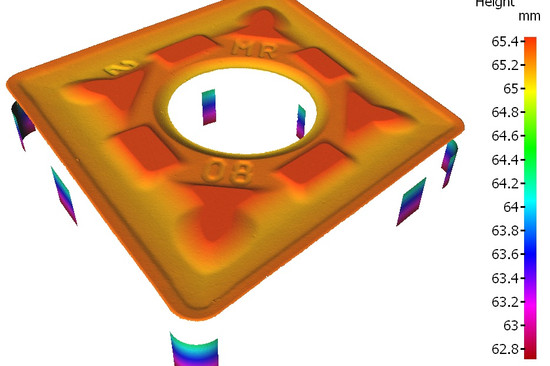
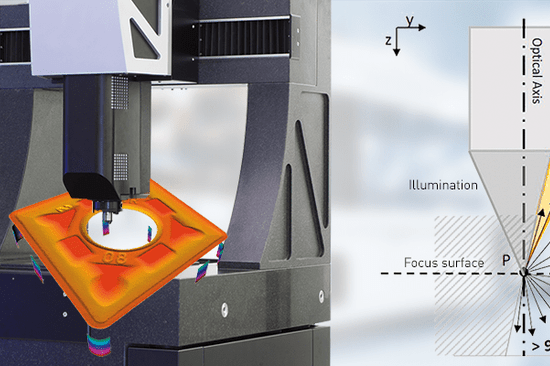
By evaluating the sharpness information along the optical axis, the method enabled the measurement of high-resolution 3D surface data — independent of reflectivity and capable of handling steep slopes. What made the difference was not only the principle itself, but the ambition behind it:
"We didn’t want to develop another method that works under ideal conditions. The goal was always to make it work in industry” says Franz Helmli, one of the first engineers at Alicona and today’s R&D director.
Building something that didn’t exist yet
The early years were not structured — they were driven. There was no blueprint, no clear separation between development, assembly, and application. Systems were designed, built, tested, and refined by the same people — often in the same space. Progress was fast, but rarely linear. Systems were built, tested, taken apart, and rebuilt — sometimes within the same day.
As Hannes Steinke – today Head of Infrastructure of Bruker Alicona – puts it: "We were a small team, only a couple of people, doing everything at once — software, hardware, integration. There were no departments. You just did what needed to be done.” He, too, was among the pioneers who met during a metrology lecture by Alicona founder Stefan Scherer, then joined the start-up Alicona directly from Graz University of Technology and have stayed with the company ever since.
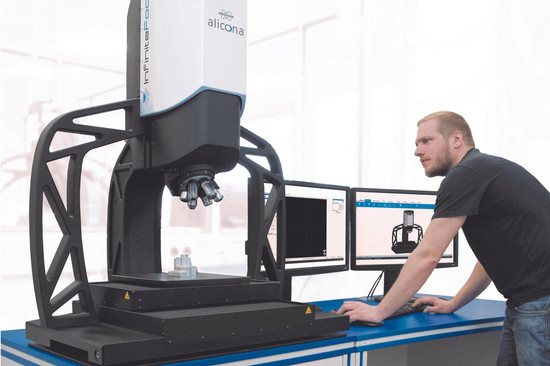
And yet, iteration by iteration, the technology matured. From early prototypes to the first real product generation, the InfiniteFocus, Focus-Variation transitioned from an experimental setup into a usable measurement system.
The strategic shift: from projects to products
In the mid-2000s came a decision that changed everything: Stop building projects. Start building products. Until then, development had largely followed individual customer needs. Moving to standardized systems meant something entirely different: scalability, comparability, and industrial repeatability. It was not just a business decision — it was what turned a technology into a product.
With systems such as InfiniteFocus and EdgeMaster, Focus-Variation became:
This shift laid the foundation for growth.
When the market responded
Asked about the moment when it became clear that this was more than just a promising technology, Franz Helmli doesn’t hesitate. It wasn’t a milestone in development. It wasn’t an internal decision. It happened on a crowded trade show floor.
"At one of the very early Control exhibitions — it must have been around 2004 in Sinsheim — I was there just to set up the systems and leave again,” he recalls. "Everything was running, I had packed my bags, ready to go.” And then the phone rang. "Stefan Scherer called me back: ‘Stay one more day.’ The booth was full — completely full. The team couldn’t keep up with the number of visitors.”
What followed was anything but a planned product presentation. Helmli grabbed a borrowed jacket and tie and stepped in. "No preparation, no script — just explaining the system, one conversation after the other. And it didn’t stop.”
One day turned into two. Two into three. Return flights were postponed — again, and again. "There was no real break. You finished one discussion, and the next person was already waiting. At some point you stop thinking about time — you just keep going.” And somewhere in between explaining measurements, answering questions, and trying to keep up with demand, the realization set in:
"This isn’t just interesting. People actually need this.” What happened in Sinsheim was not just a successful trade show. It was the moment a technology crossed a threshold — from something you demonstrate to something the industry suddenly cannot ignore.
Scaling up: from a small team to global presence
What started with a handful of people — many of them connected through their academic background — grew into an international organization. The early team shared more than just technical expertise: Most of them had studied together, developed ideas together, and built the first systems together.
This dynamic carried forward.
Over time, Alicona established itself in key industries such as:
Measurement systems moved from isolated labs into production environments — and increasingly into automated manufacturing processes.
Today: part of Bruker — with the same drive
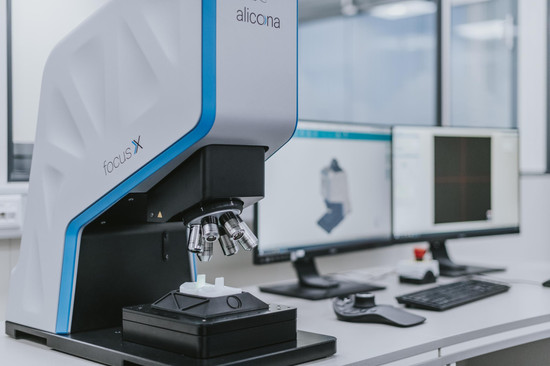
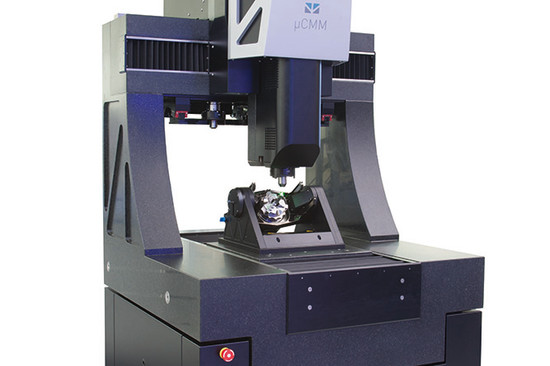
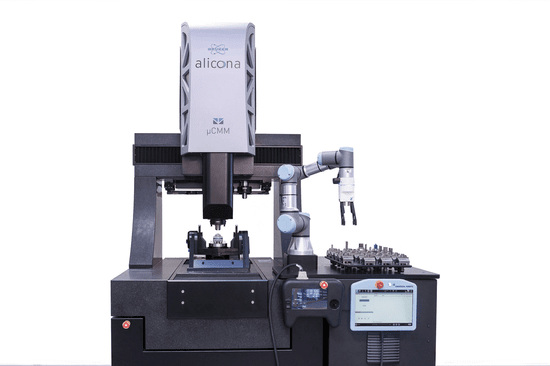
Focus-Variation has evolved into Advanced Focus Variation. The portfolio has expanded: InfiniteFocus in its sixth generation, optical CMM systems, FocusX, collaborative robot solutions, and OEM sensors.
What has not changed is the mindset: "It’s still about pushing limits — better accuracy, new applications, solving things that haven’t been solved yet”, states Reinhard Danzl, Head of Tech Team. "It never got boring”, he adds.
25 years — and not at the end of the story
In May, Bruker Alicona will mark its 25-year journey together with customers, partners, and employees. What started as a start-up has become an industrial standard — but the mindset behind it has never stood still. It was always about pushing further: improving accuracy, expanding applications, and solving problems that have not been solved yet.
And that hasn’t changed.
The anniversary will not only look back on what has been achieved — it will also point to what comes next. Without giving too much away, one thing is certain: the next step will once again reflect what has defined the past 25 years — rethinking what is measurable, and pushing it further. Because in the end, the question is still the same:
How do you make measurable what others cannot even see?

InfiniteFocus G1 (2003)

InfiniteFocus G3 (2005)

InfiniteFocus G6 - as of today

-550x366.jpeg)
die_Sonne-550x366.png "Bruker Alicona at AMB 2024 in Stuttgart")


_Nagel-550x366.jpg)

-1024x563-550x366.jpg)
dieSonne-065-868x397-550x366.jpg)
dieSonne-120-550x366.jpg)
dieSonne-137-550x366.jpg)

dieSonne-(10)-2076x1706-550x366.jpg "Optical Measuring Principles at a Glance")

dieSonne-web-(102)-550x366.jpg "Rotation and tilt unit Real3DUnitX")
-550x366.jpg "knee implant measurement")
dieSonne-(23)-1706x1708-550x366.jpg "Key Regions of Turned Parts, Stamped Parts, Round Tools measured")
dieSonne-(01)-2277x1706-550x366.jpg "Production Metrology")

dieSonne-web-(21)-550x366.jpg "Turbine Blade with Cooling Holes")


dieSonne-(9)-550x366.jpg "Alicona Imaging GmbH goes Bruker Austria GmbH")

-1536x1536-550x366.jpeg)


-550x366.jpeg)


dieSonne-268-550x366.jpg)

