The Hidden Drivers of Mold Quality

What truly defines high-performance molds—and why leading manufacturers like are rethinking quality control

出版 日 28.11.2025

Everyone talks about precision in mold making. But what really determines whether a mold will run reliably over hundreds of thousands of cycles? This article explores the often overlooked—but essential—factors that shape mold performance and long-term part quality across packaging, food, medical, electronics and consumer goods applications.

What Really Defines a High-Quality Mold in 2026?

For most mold makers, "quality” is still synonymous with tight machining tolerances. But in reality, tolerances are just one piece of a much larger performance puzzle. As customer expectations increase and production cycles grow longer, mold makers face new requirements: predictable tool life, repeatable surface finish, stable dimensional accuracy, and traceable quality documentation.

The question is no longer:

"Can we build a precise mold?”

but rather:

"Can we ensure that precision remains stable—over months, millions of cycles, and multiple maintenance intervals?”

The Factors That Actually Drive Mold Performance

1. Dimensional Stability Over the Mold’s Entire Lifecycle

A mold might leave the toolroom perfectly within spec—but how does it behave after 150,000 or 500,000 cycles?

2. Surface Finish That Impacts Function, Not Just Appearance

Surface texture affects flow, release properties, friction, wear, and aesthetics.

3. Consistency Across the Entire Mold

Traditional QC often measures only a few points, risking missed localized issues.

4. Predictable Mold Maintenance and Wear Monitoring

Customers expect mold makers to predict when maintenance is needed based on data.

Why the Mold Industry Is Rethinking Quality Control

Challenge 1 – 2D Measurements Are No Longer Enough

Challenge 2 – Visual Judgement Is Not a Process

Challenge 3 – "Final Check Only” Is Too Late

Copper injection mold for producing a single plastic bottle cap, showing detailed threading, precise cavity geometry and high-quality machining.
High-precision aluminum mold for producing PET bottles, showing detailed cavity geometry, polished surfaces, and uniform cooling structure.

How Leading Mold Makers like Meccanica Tecnica Elevate Quality Through Full-Surface Insights

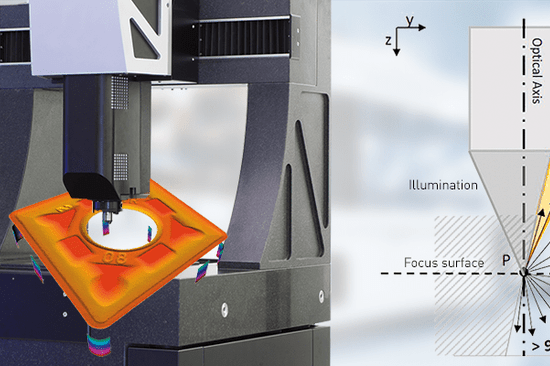
In high-end mold manufacturing, the competitive edge no longer comes from achieving a few well-measured checkpoints—it comes from understanding the entire surface and geometry of a mold. Forward-thinking mold makers have shifted from traditional point-based or profile-based inspection to capturing complete 3D datasets that reflect the real functional behavior of the tool.

Instead of measuring isolated features, they evaluate:

  • Cavities and cores as full 3D bodies, including curvature, undercuts, steep flanks and blended transitions, ensuring functional geometry is consistent across every cavity.
  • Parting lines and sealing surfaces in their entirety, detecting waviness, micro-wear, local depressions or edge rounding that can cause flash, leakage, or inconsistent sealing performance.
  • Textured, EDM or laser-structured surfaces, where local defects or non-uniformities can affect filling behavior, friction, appearance and demolding forces.
  • Polished regions and high-gloss areas, where even microscopic scratches or polishing residues become visible on molded parts and can dramatically impact perceived quality.
  • Functional interfaces such as gates, vents and ejector regions, where changes in surface integrity or local geometry have immediate consequences for part quality and tool longevity.
Two-part injection mold for PET bottles, featuring polished cavity surfaces, detailed rib structure, and high-accuracy alignment features.

This shift to full-surface data gives mold makers a new level of control. Instead of reacting to problems when a tool comes back from production, they proactively monitor high-stress or high-wear zones and establish traceable baselines for each tool. The result: greater consistency, fewer surprises, and a measurable reduction in corrective loops and emergency maintenance.

Where Do Mold Makers Need Better Data the Most?

While every mold is different, industry-wide analysis shows that most functional deviations and early wear occur in a handful of critical zones—areas that traditional QC methods rarely capture with sufficient resolution.

Parting Lines & Sealing Surfaces

These are among the most sensitive surfaces in any mold. Even minimal flattening, waviness or wear, invisible to the naked eye, can create flashing or sealing inconsistencies. Full-surface 3D inspection reveals micro-deviations long before they affect part quality.

Radii, Sharp Edges & Functional Transitions

Edges tend to wear first and most heavily, especially under high injection pressure or repeated mechanical stress. A small radius change can influence part geometry, increase demolding forces or cause local thinning of the plastic. High-resolution 3D measurements allow mold makers to track these changes across defined shot intervals.

EDM and Textured Regions 

EDM surfaces hide localized micro-craters, pits, re-cast layers and thermal damage. Laser textures, meanwhile, must remain uniform across the entire cavity to ensure consistent gloss and appearance. 3D areal measurements expose inconsistencies that profile measurements would miss entirely.

Polished Areas

What looks "mirror-finish” to an operator may actually contain micro-scratches or waviness that become visible on highly reflective consumer parts. Precise 3D topography reveals whether polishing processes achieve the required uniformity—and confirms that the finish remains stable after repeated production cycles. 

Functional Surfaces (Gates, Vents, Ejector Zones)

Small changes in local geometry or roughness can affect flow, filling patterns, and ejection marks. Full 3D datasets help mold makers evaluate whether these features remain stable under production stress.

In short: the critical areas of a mold are rarely flat, simple, or easy to inspect—yet they have the largest impact on tool life and part quality.

What Customers Expect From Their Mold Suppliers Today

Across packaging, food, medical, automotive and consumer goods markets, OEM expectations have evolved far beyond "deliver a mold that meets the drawing.” Today, global manufacturers expect mold suppliers to operate with the same level of quality documentation and process reliability as their own production lines.

This includes:

Reliable Dimensional Accuracy, Verified in 3D

OEMs increasingly require complete 3D maps of critical features—not just point-based CMM data. This ensures that the mold geometry matches the CAD data everywhere, not just at selected checkpoints.

Uniform Surface Finish Across Every Cavity

Especially in multi-cavity molds, one inconsistent texture or polishing deviation becomes immediately visible in mass production. Leading OEMs now expect cavity-to-cavity uniformity, verified with areal roughness parameters.

Standards-Based Roughness and Surface Texture Documentation

EDM surfaces, polished regions and textures must be validated using ISO 25178 areal parameters. A simple Ra value is no longer sufficient for quality decisions.

Predictable Mold Maintenance and Lifecycle Stability

OEMs want mold makers to provide measurable insight into when maintenance will be required—based on wear trends, not intuition. Lifecycle monitoring using periodic 3D measurements is becoming a core expectation in high-volume production environments.

Lower Scrap, Fewer Tool Corrections, Faster Ramp-Up

Every adjustment after sampling costs time and money. Mold makers who can provide full-surface data from the start drastically reduce the correction loop—and win customer trust faster.

The message from OEMs is clear:
"Show us the data. Prove the quality. And help us keep it stable.”
Mold makers who can meet this expectation secure long-term partnerships and premium market positioning.

The message from OEMs is clear.

"Show us the data. Prove the quality. And help us keep it stable”

Mold makers who can meet this expectation secure long-term partnerships and premium market positioning.

Deep Dive: Precision Dies

Many mold manufacturers also produce punches and stamps—where tolerances are even tighter, materials are harder, and wear mechanisms differ significantly. If your work involves high-end punching or bending dies, don’t miss our dedicated pillar article on precision dies. This article expands the conversation and provides a broader technical foundation for anyone working across both molds and dies.

Want to See What High-Resolution Mold Data Really Looks Like?

Open sand casting mold with textured inner cavity, showing the coarse mold material, parting line structure, and steel frame for alignment.

Open Sand Casting Mold Showing Inner Cavity Structure

A technical topic becomes truly tangible when you see actual data. That’s why we offer a sample Measurement Report—a real, high-resolution breakdown of:

  1. dimensional accuracy of the entire precision die,
  2. areal and profile based surface roughness,
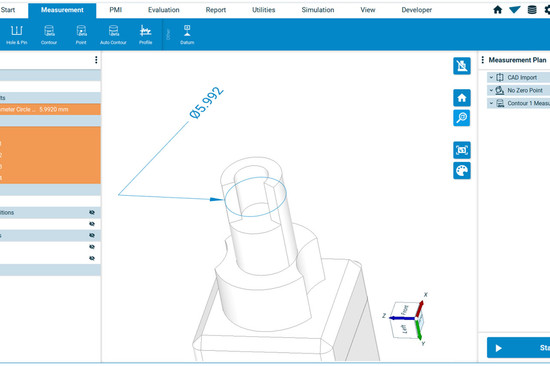
  3. contour inspection,
  4. angle measurement,
  5. radius measurement,

This report gives mold makers a clear view of how actionable, high-density 3D data enables better decisions—from initial acceptance to long-term lifecycle monitoring.

Free Download of the Measurement Report

Personal Data
Contact
分享这篇文章